In today’s data-driven digital landscape, businesses rely heavily on analytics platforms to monitor brand performance, customer sentiment, search visibility, and competitive positioning. However, raw data often comes from multiple sources, formats, and structures, making accurate analysis difficult. This is where normalization transformation rules play an essential role.
BrandRank.ai normalization transformation rules are designed to standardize, organize, and transform data into a consistent format that can be analyzed effectively. By eliminating inconsistencies and ensuring uniformity, these rules help organizations gain more reliable insights and make better business decisions.
As companies increasingly depend on artificial intelligence and data analytics, understanding normalization processes becomes crucial for improving data quality and maximizing the value of collected information.
What Are Normalization Transformation Rules?
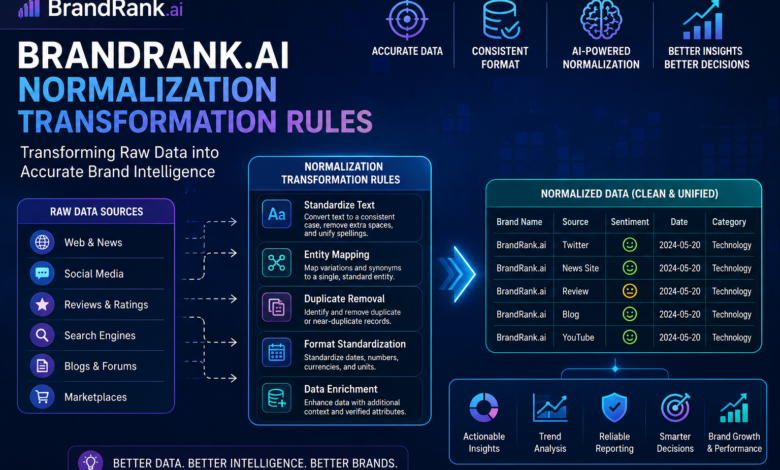
Normalization transformation rules refer to the processes used to clean, standardize, and structure data before it is analyzed. Data collected from websites, social media platforms, customer reviews, search engines, and marketing campaigns often contains inconsistencies.
Examples include:
- Different spellings of brand names
- Variations in product descriptions
- Duplicate records
- Formatting inconsistencies
- Incomplete information
Normalization rules transform these data points into a unified structure, ensuring that analytics systems can interpret information accurately.
For platforms like BrandRank.ai, normalization is a critical step in producing meaningful brand intelligence and performance insights.
Why Data Normalization Matters
Without proper normalization, businesses may struggle with inaccurate reports and misleading conclusions.
Improved Data Accuracy
Normalization removes inconsistencies that can distort analysis and reporting.
Better Decision-Making
Reliable data helps organizations make informed marketing, branding, and business decisions.
Enhanced Analytics
Standardized datasets improve the effectiveness of machine learning models and analytical tools.
Reduced Duplication
Normalization identifies and merges duplicate information, creating cleaner datasets.
Consistent Reporting
Businesses can generate reports using standardized information across multiple channels and sources.
These benefits make normalization a foundational component of modern data management.
How BrandRank.ai Uses Data Transformation
Data transformation involves converting raw information into a format suitable for analysis.
BrandRank.ai may apply transformation rules to:
Brand Mentions
Different references to the same company can be standardized into a single recognized brand entity.
For example:
- BrandRank AI
- BrandRank.ai
- Brand Rank AI
These variations can be normalized into one consistent brand identifier.
Customer Feedback
Customer reviews often contain inconsistent formatting, abbreviations, and spelling variations. Transformation rules help standardize this content for sentiment analysis.
Search Data
Keywords and search queries can be cleaned and categorized to improve visibility tracking and trend analysis.
Social Media Content
User-generated content may contain hashtags, abbreviations, emojis, and varying naming conventions. Normalization ensures these references are analyzed consistently.
Common Normalization Techniques
Several techniques are commonly used in normalization processes.
Text Standardization
Converts text into a consistent format by adjusting capitalization, spacing, punctuation, and spelling variations.
Duplicate Detection
Identifies duplicate entries and merges them into a single record.
Data Mapping
Maps different terms and phrases to a standardized category or entity.
Formatting Consistency
Ensures dates, currencies, numerical values, and other data types follow a uniform structure.
Entity Recognition
Uses artificial intelligence to identify people, brands, products, and organizations across multiple data sources.
These methods improve the quality and reliability of analytical results.
The Role of AI in Data Normalization
Artificial intelligence significantly enhances modern normalization processes.
Natural Language Processing (NLP)
NLP helps systems understand language variations, context, and meaning.
Machine Learning
Machine learning algorithms continuously improve normalization accuracy by identifying patterns and relationships within data.
Automated Classification
AI can automatically categorize large datasets, reducing manual effort and increasing efficiency.
Sentiment Analysis
Normalized data improves sentiment analysis accuracy by ensuring consistent interpretation of customer feedback and brand mentions.
As AI technology advances, normalization systems become more intelligent and capable of handling increasingly complex datasets.
Benefits for Brand Intelligence
Brand intelligence platforms depend on accurate and consistent data to generate meaningful insights.
Normalization transformation rules help organizations:
- Monitor brand reputation
- Track customer sentiment
- Analyze competitor performance
- Measure campaign effectiveness
- Identify market trends
- Improve strategic planning
Without standardized data, these insights may become unreliable or misleading.
Challenges in Data Normalization
Despite its importance, normalization presents several challenges.
Data Volume
Modern organizations collect massive amounts of information from multiple sources.
Data Variety
Different platforms generate data in various formats and structures.
Language Differences
Global brands often analyze content in multiple languages, requiring advanced normalization techniques.
Real-Time Processing
Many analytics platforms must normalize data instantly to provide real-time insights.
Advanced AI systems help overcome these challenges by automating complex normalization tasks.
Best Practices for Effective Normalization
Organizations seeking accurate analytics should follow several best practices.
Establish Data Standards
Define consistent naming conventions, formats, and classifications.
Automate Processes
Use AI-powered tools to reduce manual effort and improve scalability.
Regularly Review Rules
Normalization rules should evolve as data sources and business requirements change.
Monitor Data Quality
Continuous monitoring helps identify inconsistencies before they impact reporting.
Integrate Multiple Sources
Combining data from various channels provides a more complete picture of brand performance.
The Future of Data Normalization
As businesses generate increasing amounts of data, normalization will become even more important. Artificial intelligence, machine learning, and advanced analytics technologies are expected to improve the speed and accuracy of transformation processes.
Future normalization systems may offer:
- Real-time data standardization
- Improved multilingual processing
- Enhanced entity recognition
- Greater automation
- More accurate predictive analytics
These advancements will help organizations gain deeper insights from increasingly complex datasets.
Conclusion
BrandRank.ai normalization transformation rules play a critical role in improving data quality, consistency, and analytical accuracy. By standardizing information from multiple sources, normalization enables organizations to generate reliable insights, improve decision-making, and strengthen brand intelligence strategies.
As artificial intelligence continues to evolve, normalization technologies will become even more sophisticated, helping businesses unlock greater value from their data. Organizations that prioritize data quality and consistency will be better positioned to compete in today’s increasingly data-driven marketplace.
Frequently Asked Questions (FAQs)
What are BrandRank.ai normalization transformation rules?
They are processes used to standardize, clean, and organize data for more accurate analysis and reporting.
Why is data normalization important?
Normalization improves data accuracy, consistency, reporting quality, and decision-making.
How does AI help with normalization?
AI uses machine learning and natural language processing to identify patterns, standardize data, and automate transformation processes.
What types of data can be normalized?
Customer feedback, search data, social media content, brand mentions, product information, and marketing analytics can all be normalized.
What are the benefits of normalization?
Benefits include improved analytics, reduced duplication, enhanced reporting accuracy, and better business insights.
How does normalization support brand intelligence?
It ensures data consistency, allowing organizations to monitor reputation, sentiment, and market performance more accurately.
What challenges exist in data normalization?
Common challenges include large data volumes, multiple formats, language differences, and real-time processing requirements.